
Parking Deck Waterproofing and Traffic Coatings in Manhattan
Every winter, salt water off tires sits on Manhattan garage decks and works into the concrete through bare slabs, open cracks and failed joints. We seal it out with parking garage waterproofing built for vehicle traffic: coatings on drive lanes and ramps, membranes under plazas and toppings, and joint seals that move with the structure.
- Coatings Built for Vehicle Traffic
- Joints That Flex Without Leaking
- Work Phased Around Open Parking
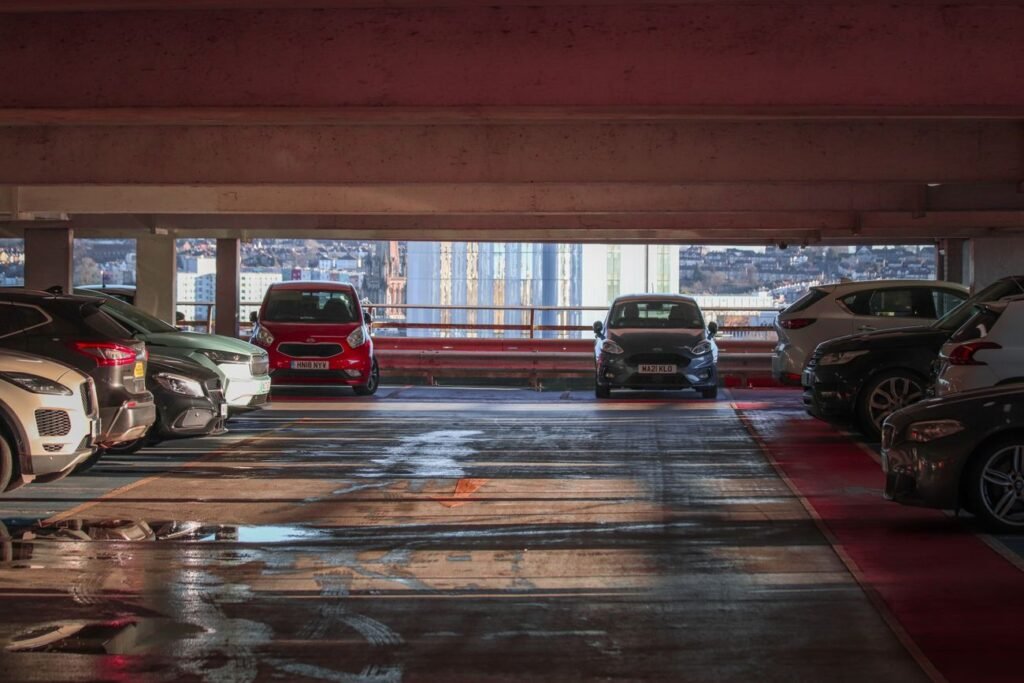
Why a Parking Deck Needs Its Own Waterproofing
Concrete is porous, and a parking deck has water carried onto it by every car. Chloride from road salt soaks in, reaches the steel and starts the corrosion that ends in spalling, while water dripping through cracks and joints stains cars and finishes on the level below. Parking deck waterproofing puts a barrier on the slab so salt water drains away instead of soaking in.
Most Manhattan garages need more than one system. Drive lanes and ramps take a traffic coating, decks buried under plazas or toppings need a membrane, and every joint needs a sealant that stretches and closes as the structure moves. A coating worn through to bare concrete is also a common SREM item in Local Law 126 reports.
Deck Waterproofing Work We Take On
From first-time protection on a bare slab to a leak that has dripped onto the same parking space for years.
New Traffic Coating Systems
Bare or sealer-only decks get a full system: the slab is prepared, cracks are detailed and each layer is built up to the specified thickness.
Recoating Worn Decks
Where an old coating has thinned in wheel paths and turns, we repair the worn spots and add a new wear layer, often without stripping the whole system.
Leak Tracing and Repair
Drips onto cars below are traced back to the joint, crack, drain or coating edge above and sealed at the source.
Penetrating Sealer Treatment
On decks that do not need a full coating, a silane sealer soaks into the surface and repels water and salt without leaving a film or changing how the concrete looks.
When a Deck Coating Has Stopped Working
Gray concrete showing through the coating in wheel paths and at ramp turns.
Coating that bubbles, lifts or peels at drains, edges and old patch lines.
Drips and stains on cars and ceilings below, lined up with joints and cracks above.
Joint seals that have split, hardened or pulled away from one side.
Puddles that sit for days because slopes or drains no longer carry water off.
Coatings, Membranes and Joints
Three systems keep water out of a parking structure, and most garages need all three in different places.
Traffic Coatings
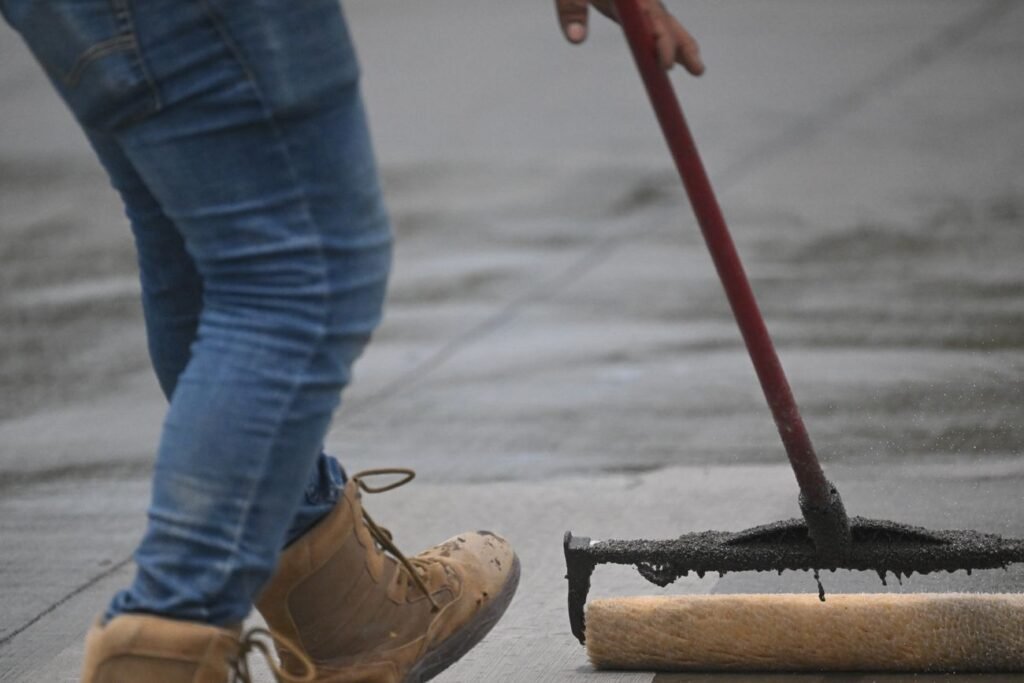
A vehicular traffic coating is a liquid-applied elastomer built up in layers: a base membrane that bridges fine cracks, then a wear coat with aggregate for grip. Polyurethane systems are the most common, and fast-cure acrylic systems suit decks that cannot close for long.
Membranes
Our plaza deck waterproofing uses a membrane laid on the structural slab and then covered with drainage, insulation, pavers or a topping. Once the plaza goes back on, the membrane cannot be reached, so details at drains, walls and penetrations get the most attention.
Joints
Expansion joint repair replaces failed seals with systems sized for how far the joint opens and closes. Control joints, cracks and the cove where the slab meets a wall get a flexible sealant tied into the coating.
How a Deck Coating Goes Down
Check the Slab First
Concrete repairs must be finished and cured before anything is sealed in. We check the slab for moisture and run a small adhesion test before the full coating is ordered.
Prepare the Surface
Shot blasting or grinding opens the concrete so the coating can grip. Cracks are routed and sealed, and joints are cleaned out and prepared for new seals.
Build the Layers
Primer, base membrane, wear coat with aggregate and top coat go down in order. Wet film thickness is checked as each layer is applied, with heavier wear coats at turns and ramps.
Stripe and Reopen
Once the system has cured, stall lines and arrows are restored and the area reopens. You get a record of products, thicknesses and the spots to watch for wear.
Waterproofing Around Manhattan Weather and Tenants
Planning Around Cold Weather
Most coatings need dry concrete and temperatures above the maker’s minimum, so exposed roof decks are usually coated in the warmer months. Some fast-cure systems are rated for cold-weather application, which helps when a leak cannot wait for spring.
Coating Without Closing the Garage
We coat in zones, often at night, so most spaces stay open. Some fast-cure products have a strong odor while curing, so ventilation and notice to the building above are planned before work starts.
Send photos and your latest report, and we will find where it gets in.
What Goes Into a Deck Coating Price
Parking garage coatings are priced by area and condition after a walk of the deck. These five things move the number most.
Deck Area and Layout
Ramps, tight turns and many small bays take more labor per square foot than an open, flat level.
Condition of the Old Coating
A well-bonded system can often be cleaned and recoated, while one that is lifting has to come off first.
Surface Preparation
Shot blasting, grinding and crack routing add time before any coating goes down.
System Type and Thickness
Fast-cure systems and heavier wear coats at turns cost more upfront and can shorten closures or recoat cycles.
Joint Length and Type
Expansion joint repair is priced by length, and wide joints that move a lot need larger seal systems.
Coatings That Hold Up to Daily Traffic
Thickness Checked as It Goes On
Wet film readings are taken during each layer, because a thin spot is where parking garage waterproofing wears through first.
Repairs Done Before Anything Is Sealed
The same team fixes damaged concrete first, so no hollow areas get trapped under a new coating.
Wear Spots Flagged Early
We mark the turns and wheel paths to watch, so the top coat can be renewed before the base membrane is exposed.
Questions About Deck Waterproofing and Traffic Coatings
How long does a parking garage traffic coating last?
It depends on traffic and upkeep. Wear coats in turns, ramps and entry lanes thin first. Renewing the top coat in those areas before the base membrane shows keeps the whole system working much longer.
Can a new coating go over the old one?
Often, yes, if the old system is still well bonded. We test adhesion first. Areas that are lifting or blistering are removed, and the rest is cleaned, prepared and recoated.
What is the difference between a silane sealer and a traffic coating?
A silane sealer soaks into the concrete and repels water but leaves no film and does not bridge cracks. A traffic coating forms a flexible membrane on top that seals fine cracks and takes the wear from tires.
Which traffic coating is best for a Manhattan garage?
Polyurethane traffic coating systems are the standard choice for most decks. Fast-cure acrylic systems cost more but can reopen far sooner and go down in colder weather. Rigid epoxy is better kept to areas without moving cracks.
How long will part of the garage be closed?
It depends on the system and the weather. Standard urethane systems usually need days to cure, while some fast-cure systems can take traffic within hours, according to manufacturer data. We set zones so most spaces stay open.
Why does water still leak after a deck was coated?
Most leaks come from details, not the open deck: failed joints, cracks at walls, drains and the coating’s edges. Each of those needs its own seal tied into the coating.
Does deck waterproofing help with our next Local Law 126 inspection?
It helps indirectly. A deck that keeps salt water out deteriorates more slowly, so fewer conditions develop between inspections. The QPSI still judges the structure on what they find during the Local Law 126 inspection.
Can we waterproof the garage in phases over more than one season?
Yes. The top deck, ramps and areas over occupied space usually go first. Each phase ends at a sealed termination line so water cannot get under the new coating where it stops.
What do you need from us to quote deck waterproofing?
Photos of the deck and any leaks, your latest Local Law 126 report and drawings if you have them. Call (917) 355-8556 or upload them with the form below and we will set up a walk-through.